Showing posts with label travel. Show all posts

Friday, June 19, 2026

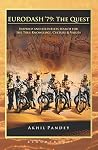
Eurodash79 - Book review


EURODASH79: The Quest - Inspired and Relentless Search for the True Knowledge, Culture & ValuesEURODASH79: The Quest - Inspired and Relentless Search for the True Knowledge, Culture & Values by Akhil Pandey
My rating: 4 of 5 stars

Just finished reading Akhil Pandey’s travelogue ‘Eurodash79’.
It is about seven colleagues riding to Europe from India in 1979 on four motorcycles, all Yezdis.
The book has been written after forty years of having Eurodashed!
A lot of details have been given regarding the planning of the road trip, right from deciding the route on paper maps, since GPS or Google maps was unheard of then, applying for visas, getting leave sanctioned, convincing family members, organising the finance, all of which makes it a good case study and used in some management classes.
Every chapter begins with a parable and sometimes a quote which sets the mood for the chapter and this would be a great read for readers interested in history as every place they visited has been described in detail not only geographically but also an in-depth historical background of the city.
At the end of the chapter there is a box which mentions the take away for the riders from the place visited.
Interestingly they did this trip on a shoestring budget of five US dollars per day per head as in those days foreign exchange was strictly regulated, which led to them sleeping on streets many a time to save precious scarce funds!
Overall, an interesting read and a must read for travellers who wish to learn how people travelled in the ‘good old days’.
This book is more by a traveller than a rider.

View all my reviews

Tuesday, July 23, 2024

Ghent, Belgium

Ghent, or Gent in Dutch, is a historic city in Belgium. It is known for its rich cultural heritage, medieval architecture, vibrant arts scene, and a lively student population.

Ghent combines the charm of a small town with the vibrancy of a bustling city. Its canals, historic buildings, and lively squares create a picturesque and inviting atmosphere. Whether you're exploring its rich history, enjoying its contemporary art scene, or savoring its culinary delights, Ghent offers a unique and enriching experience for all who visit.

Most of these landmarks are within walking distances from each other.

The Gravensteen Castle - a medieval castle, built in 1180, is one of Ghent's most iconic landmarks and provides a glimpse into the city's feudal past. The current castle was the residence of the Counts of

Flanders until 1353. It was subsequently re-purposed as a court, prison, mint, and even as a cotton factory. It was restored over 1893–1903 and is now a museum and a major landmark in the city.

Belfry of Ghent: A UNESCO World Heritage Site, this belfry offers panoramic views of the city and is a symbol of civic freedom. Construction of the tower began in 1313 after a design by master mason Jan van Haelst. The work reached completion in 1380. 


The uppermost parts of the building have been rebuilt several times, in part to accommodate the growing number of bells.

Saint Bavo's Cathedral is a masterpiece of Gothic architecture. Construction of the Gothic church began around 1274. In the subsequent period from the 14th through 16th centuries, nearly continuous expansion projects in the Gothic style were executed on the structure. 

When the Diocese of Ghent was founded in 1559, the church became its cathedral. Construction was considered complete on 7 June 1569.

St. Nicholas Church is one of the oldest and most prominent landmarks in Ghent, Belgium. Begun in the early 13th century as a replacement for an earlier Romanesque church, construction continued through the rest of the century in the local Scheldt Gothic style. 

Typical of this style is the use of blue-gray stone from the Tournai area, the single large tower above the crossing, and the slender turrets at the building's corners.

The City Hall of Ghent is a four-sided complex surrounded by the Botermarkt, the Hoogpoort, the Stadhuissteeg and the Poeljemarkt. The main wings are the late-Gothic alderman's house of De Keure and the alderman's house of Gedele in the Renaissance style. The building has 51 halls.

Ghent's City Hall seen from the Grote Markt

The Royal Flemish Academy of Dutch Language and Literature is a government organization which was established in 1886 by Royal Decree as Koninklijke Vlaamse Academie voor Taal- en Letterkunde.

In 1972 the name of The Royal Flemish Academy for language and literature was changed to The Royal Academy of Dutch language and literature, and in 1981 the existence of the Academy was confirmed by a decree of the Council for Cultural Affairs for the Dutch cultural community (the predecessor of the Flemish Parliament) (decree of 13 February 1980). The KANTL is now an institution of the Flemish Government.

 St-Jacobskerk - The Romanesque twin towers of this iconic church date from the 12th century but the church itself has undergone numerous expansions, renovations and reconstructions over its long history. 


It's believed there has been a place of worship on the site since the 7th century, with the first church constructed in 1093. Today the square surrounding it is regarded as the epicentre of the Gentse Feesten; it also hosts the town's favourite flea market.

And last but not the least if you like murals/graffiti do visit the lane that is filled with it. It’s an amazing experience. Check out the brief video below.


Friday, April 26, 2024

Amsterdam

We landed in Amsterdam’s Schiphol Airport on a cold, rainy, windy afternoon. 

Not a very welcome sign but we soon realised that the weather in Amsterdam is indeed very fickle. Shine, rain, windy, cold, warm all in a day’s work! Hence, while in Amsterdam, don’t look for the perfect weather to go out. Just pick up your itinerary, raincoat and set out to enjoy your day! So, without any further ado we headed towards Foodhallen, the happening food court in Amsterdam on a Saturday 


evening and wow we were infected by the enthusiasm of the people gathered there for a lovely evening of music, food, companionship and Heineken to wash it all down.

The first thing I noticed was that the parking area for cycles was much larger than that for cars and while there were quite a few spots left for car parking, the cycles were filling up fast and furious!

After hustling for a while, we managed to get a table to sit together and enjoy world cuisine. We started off with the famous Bitterballen, a classic Dutch snack, followed by Thai, Mediterranean snacks.


Next morning we set out for a bicycle tour of Amsterdam. 


This was the prime reason of my visit to Amsterdam, the most cycle friendly city in the world. 

We cycled through some interesting places like the Anne Frank Museum, the Skinny bridge (so called because once upon a time the poorest of the poor lived there), 


the narrowest house, the beautiful Vondel park where we saw an intriguing piece of Picasso’s art.

The tour guide explained the strange narrow fronts of the houses in Amsterdam. The houses were taxed depending on the width of the houses but now of course it isn’t so but these are prohibitively expensive due to its heritage value. You will also find houses tilting to one side as these houses were built on swamp land on wooden pillars which are now slowly sinking.

While in Amsterdam I did not want to miss the unique Street Art Museum – Straat! It was absolutely amazing!

The boat tour of Amsterdam is another way to see all the beauty of Amsterdam, which we did. Our canal boat tour guide mentioned that the canals are nine feet deep of which three feet is mud, three feet are bicycles and three feet is water!


The Grand Centraal station is an amazing, impressive structure. The parking lot for cycles is in the basement and they have an escalator to wheel your cycles up and down!

Then of course we visited Keukenhof, Zaandam and Zaanse Schans which deserve individual posts. Stay tuned!

My only regret is I could not meet up with a blogger friend due to sheer lack of time. He blogs about Amsterdam at sccollections . Spoke to him on the phone and hoped to meet up sometime! Do visit his blog for more local insights.

Tuesday, April 26, 2022

Humour and travel


Don't Forget Your GuidebookDon't Forget Your Guidebook by David Ways
My rating: 4 of 5 stars

A racy fun read about the travails and travels of a wannabe traveller.

Entertaining and easy read. Well narrated.

A smorgasbord of travel experiences that include romance, street food, street culture, behaviour of the locals towards tourists, and much more to keep you smiling.

Definitely worth a read maybe on your next journey!

I received an advance review copy for free, and I am leaving this review voluntarily.

View all my reviews

Tuesday, June 8, 2021

When Places Come Alive - Book reviewed


When Places Come AliveWhen Places Come Alive by Ami Bhat
My rating: 4 of 5 stars

It's a fun, interesting and a quick read about all those exotic places you might have visited or will surely want to visit after reading this book by Ami Bhat who is a passionate traveler, photographer and an amazing narrator.
I finished reading this book in one sitting as most of you will.
Her writing is fluid and engaging and she knows exactly how much time and talk is to be devoted to each story without letting you keep the book down.
It reminded me of the tour guides at all tourist places who hold your interest with stories that you might have heard but they have the knack of spicing them up with their own creativity.
The basic premise that Ami Bhat has based her stories on is that every popular place has some myth, legend or very interesting history associated with it. In this book she narrates the best myth by giving it her own spin followed by a short fact sheet of the place and links for additional reading if you wish.
She takes the reader on ten different trips to ten fascinating destinations, both National and International.
My personal favourites are (in no particular order) -

1. Where did she go - in Kuldhara, Rajasthan, India (famous as the abandoned village)

2. Sparkling Secrets - Gold Coast, Australia (fun treasure hunt)

3. The Last village - Ladakh, India (Aryan descendants)

The other seven too are fascinating and fun reads but the above three appealed to me due to personal reasons.

A must read for all travelers or even wannabe travelers!


View all my reviews

Saturday, November 14, 2020

Notes from Nepal - Book review


Notes from NepalNotes from Nepal by Joshi Mukard
My rating: 4 of 5 stars

A very well written book about adventure travel in Nepal. A tongue in cheek account of the Nepali way of life and the typical characteristics of the Nepalis.
I had always been fascinated about the Annapurna Base Camp trek and have read quite a few travel stories about it but this one beat them all hands down. However the tedious and tiresome the trek might have been, the author gets it across with dollops of humour. You will not turn a single page without a smile.

Here are a few excerpts to give you an idea of the laughs that you are in for when you read the book.

Some of the wooden planks from the flooring have gone missing, creating enough gaps for an average sized person to fall through effortlessly, and kill themselves by smashing their heads on round inviting rocks below, which appear to be there just for this purpose.

I even reply with a never before elaboration to forwarded Good Morning messages to people whose messages I never once bothered to even open,...

My odd behaviour is not a side effect of over-drinking. It feels like I'm saying my goodbyes.

I had already compromised on my dream of sleeping in a bag that doesn't have somebody else's fart collection.

Intriguingly, the latest news that's out there on the internet about bear attacks in the area dates back to 2014. I don't know what happened to the bears after 2014. It cannot be like they just called a meeting, held a referendum, and elected to remove humans from their hit list.


It is a one sitting read. Perfect for short flights or lonely evenings or just about anytime you feel like uplifting your spirits.
I bought this book on Amazon Kindle for a measly 99/- Go for it guys. It's worth every rupee spent.

View all my reviews

Tuesday, September 10, 2019

A tale of 3 palaces and a park


You step out of Berlin and enter Potsdam – a popular tourist destination. It is popular for the palaces and parks. We visited Potsdam to check out the three famous palaces – Sans Souci, Orangery and the New palace, each one unique in its architecture and layout though all in walking distances from each other.


Our first stop was the Sans Souci palace, disappointing at first sight, not at all impressive as a palace 


ought to be. 

It was the summer palace of Frederick the Great, King of Prussia and despite its 


diminutive size was considered the German rival of the French Versailles. The palace was designed and built by George Wenceslaus von Knobelsdorff between 1745 and 1747 to fulfil King Frederick's


need for a private residence where he could relax, away from the pomp and ceremony of the Berlin court. Hence the cosy ambiance I suppose. As a matter of fact ‘Sans Souci’ in French means ‘without worry’ or carefree.
The palace was renovated during the nineteenth century by Frederick William IV and was a favourite place of residence for the German imperial family until the fall of the Hohenzollern dynasty in 1918.
Following the terracing of the vineyard and the completion of the palace, Frederick turned his


attention to the landscaping of the greater vicinity of the palace and thus began the creation of Sans Souci Park by planting over three thousand trees producing oranges, melons, peaches and bananas.


After World War II it became a tourist destination in East Germany and in 1991, following German reunification, Frederick's casket was interred in the terrace of the vineyard of Sans souci – in the still 


existing crypt he had built there – after dark, without pomp, in accordance with his will. Sans Souci palace and its gardens became a World heritage Site in 1990.

A short walk through the beautiful gardens and we were outside the Orangery Palace. Was not


expecting anything spectacular after the disappointment of seeing the Sans Souci but was pleasantly surprised. Well, this was nothing spectacular but was a moderately impressive structure. This was designed and built by Frederick IV, the ‘Romantic on the throne’ between 1851 and 1864.
The building, with its 300 meter long front, was built in the style of the Italian Renaissance, after the image of the Villa Medici in Rome and the Uffizi in Florence.
The building in the centre is the actual palace while the halls adjacent to it are the plant halls where plants from the park are kept during winter under controlled temperatures.
Since 1990 the Orangery Palace has been declared a United Nations Heritage Site.

Further down, on the Western side of the Sans Souci Park is the real impressive palace – The New Palace built by Frederick II between 1763 and 1769 and considered to be the last great Prussian Baroque Palace.


For the King, the New Palace was not a principal residence, but a display for the reception of important royals and dignitaries. It had over 200 rooms, four principal gathering rooms and a theatre for royal functions, balls and state occasions. The centre portion of the palace was crowned with an enormous dome, at the top of which were placed the Three Graces supporting the Prussian royal crown. Additionally, the north and south auxiliary wings are crowned with domes surmounted by gilded eagles. Opposite to the palace’s westward-opening court of honour are the Communs, designed


by Carl von Gontard and Jean Laurent Le Geay. Styled in the same manner as the palace itself, the two buildings housed the royal kitchens, utilities, gardeners’ shops, palace guards and servants. Today the buildings are used by the University of Potsdam.

Thus ends my tale of the three palaces and a park in Potsdam. Have not given you an intense dose of history as there is plenty available on the internet for those wanting to go into the detailed history of these palaces and their builders.

We could not enter the palaces as either there were long queues or no slots available so if you wish to spend time in the exploration of the interiors you will do well to book your entrance tickets online prior to your visit.

Wednesday, January 23, 2019

Fun and sights in Scotland.


We happened to visit Edinburgh during the Fringe festival being held there. It is a fun festival where there are a lot of street performances apart from theatrical performances and the city is wrapped in the festivities. Click on the link below for a virtual experience.


We kicked off our Edinburgh experiences with a Free Walking tour conducted by our favourite Sandeman’s. The guide as always very knowledgeable started rattling off the history of Scotland as we walked through the historic city of Edinburgh. Click on the link below for a virtual experience.


Scotland is riding country. My riding plans got scuttled by paucity of time. However I did the next best thing. Took a bus trip to Loch Ness from Edinburgh and back and though we did not reach Loch Ness due to a road closure caused by a fatal accident, we were taken round the countryside which soothed all frayed nerves and everyone was happy at the end of the day when dropped off. Such is the magnificence of the Scottish countryside. Click on the link below for a virtual experience.

Saturday, May 5, 2018

Wondrous Vienna


If you are looking for history, culture, music or maybe just a place to romance your loved one or yourself, head for Vienna!

Vienna the capital and the largest city of Austria will not disappoint you. Its beauty will wrap itself around you as you sway to the enthralling strains of Mozart, Beethoven or Haydn. Visit the Prater for some thrilling rides or just a spin on the Ferris Wheel (one of the oldest in the world) and drink in the beauty of Vienna from a bird’s eyeview.

There are plenty of pubs, cafes and fine dine restaurants to suit all tastes and pockets too. the transportation is a breeze in the trams and trains. The people are warm and friendly.

Just be careful that you are not so smitten by Vienna that you forget to get home!

Here is a short compilation of the Viennese sights to give you a glimpse of the wonders of Vienna.


Thursday, June 22, 2017

A photo essay of Budapest.

Budapest, the capital of Hungary, considered to be one of the largest cities in the European Union, is a combination of two cities Buda and Pest, which were united in 1873 to form Budapest.

Like most of the cities in Europe Budapest too bears the scars left by the Nazis. Let us take a walk through this beautiful city starting in Pest and then climbing to Buda to discover what makes it one of the most visited cities in Europe. Buda and Pest are separated by the Danube river.

The architecture is marvellous and leaves you spellbound with its beauty. 


The art on the exteriors of buildings are a sight to behold!


Beautiful doors too!


The streets are lined with pretty flowering plants on lamp posts.


The Great Synagogue is the second largest synagogue in the world!


Another impressive structure is the St. Stephen's Basilica, a Roman Catholic basilica  It is named in honour of Stephen, the first King of Hungary, whose supposed right hand is housed in the reliquary.


 The ‘Shoes on the Danube Bank’ is a memorial to honour the Jews who were killed by fascist Arrow Cross militiamen in Budapest during World War II. They were ordered to take off their shoes, and 


were shot at the edge of the water so that their bodies fell into the river and were carried away with the flow of the river while their shoes were left behind. The story is that the killers believed that the Jews had hidden money and jewels in their shoes hence were asked to take off their shoes before being killed.
The Széchenyi Chain Bridge is a suspension bridge that spans the River Danube between Buda and Pest, and was the first permanent bridge across the Danube in Hungary, opened in 1849.


Just before reaching this bridge you will come across the very impressive Hungarian Parliament building that is awe inspiring.


Across the bridge is the Buda castle, the historical castle and palace complex of the Hungarian kings in Budapest, and was first completed in 1265.


In Buda you can see the magnificent Mathias church opposite the Fisherman's bastion.


Although no archaeological remains exist, as per the local story, it was originally built in Romanesque style in 1015. The current building was constructed in the florid Gothic style in the second half of the 14th century and was extensively restored in the late 19th century.

This is the Fisherman's bastion


Click here to see more pictures of Budapest that I have captured.

Friday, May 26, 2017

A photo walk in Berlin

Berlin is a beautiful city that sends out gentle vibrations of assimilation to anyone who cares to receive. She still remembers the brutal past to ensure a happy present and future. This can be seen in all the architecture and monuments that dot the city as a reminder. Yet the bustling metropolis is abuzz with modern technology to continue a comfortable living today.
Join me for a photo walk in this magnificent city to get a glimpse of living history.


The Brandenburg gate was built in the 18th century on the orders of the Prussian King Frederick II. It is seen as a symbol of European unity and peace. For details click here.


An imposing structure that overwhelms was opened in 1894 and was the the meeting place for 'Imperial Diet' but was destroyed in a fire in 1933 and then by bombing during the 2nd World War. The restoration started in 1970 and by 1990 was almost complete. Now tourists can visit the building and go up to the glass dome. Details here.


The Holocaust memorial for the murdered Jews of Europe is an amazing work of art. This is a memorial of 'tombstones' representing Jews of all ages, big and small. More details here.


Formerly the Luftwaffe headquarters and feared even now as it houses the German Revenue Ministry.


Time for some yummy currywurst with bread. Currywurst is German fast food of sausages seasoned with curry ketchup (spiced ketchup). 


The famous 'Checkpoint Charlie' that was the name given by the Allied Forces to the best known crossing point between East and West Berlin during the Cold War. For more details click here.


Art from the world over on the famous East side gallery, a part of the Berlin Wall that was brought down in 1990 though this is preserved. Know all about it here.


This German Cathedral is a must visit for the history and art within apart from the amazing views of Berlin from the dome.


Beautiful Berlin viewed from the dome of the German Cathedral.
As I said earlier, this is but just a glimpse into an evolving Berlin.

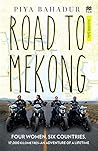
Road to Mekong - Book review

  Road to Mekong: Four Women, Six Countries - An Adventure of a Lifetime by Piya Bahadur My rating: 5 of 5 stars Was an amazing ride! It...